
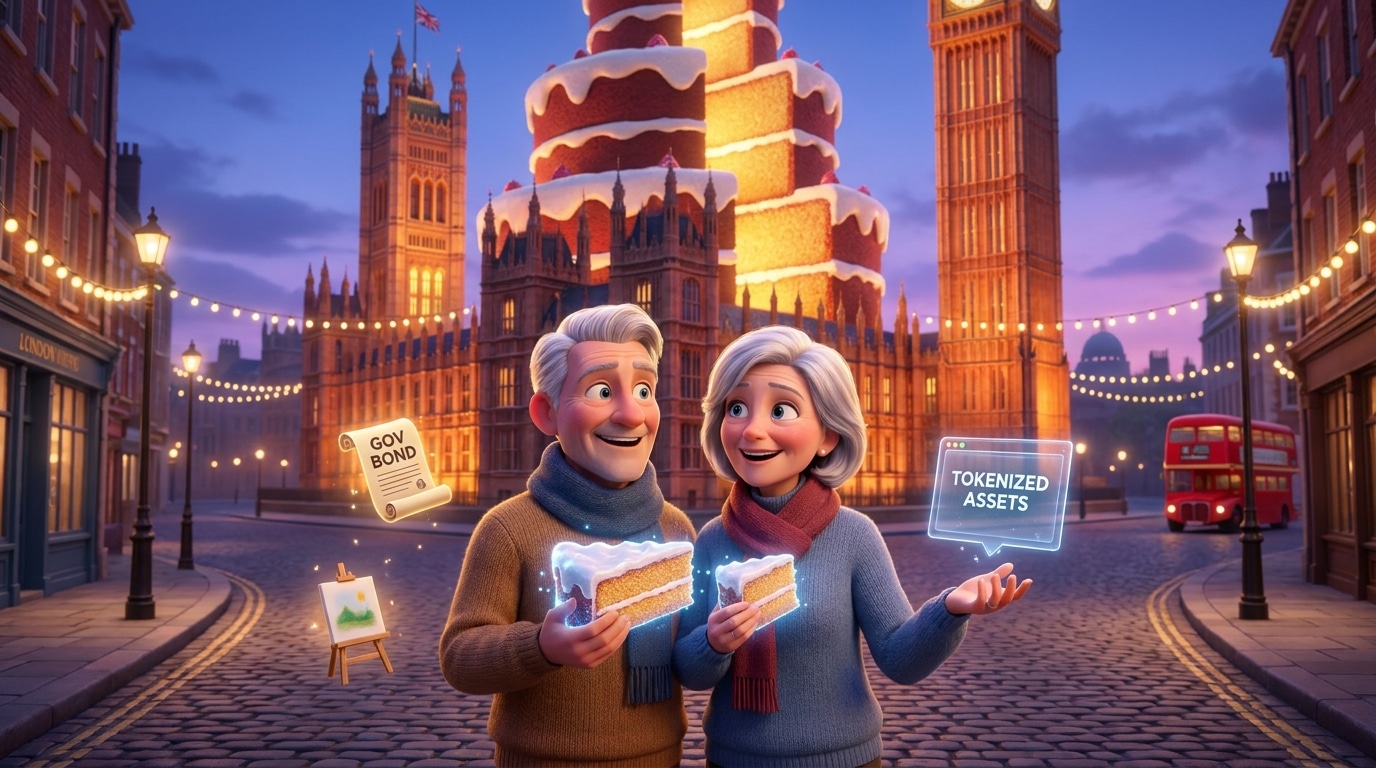
When I first heard about the UK’s Digital Securities Sandbox, I thought someone was having me on. The idea that you could own a fraction of a Mayfair office building the same way you might own shares in Tesco seemed, well, a bit far-fetched. But here we are in 2026, and it’s actually happening. The Financial Conduct Authority has opened the doors to something rather extraordinary, and I reckon it’s worth understanding what all the fuss is about.
Why This Actually Matters (More Than You Might Think)
Let me paint you a picture. Remember when you could only invest in property if you had tens of thousands of pounds sitting around? Or when buying government bonds meant filling out forms that would make your eyes glaze over? Well, blockchain real estate investment is changing all that, and the Digital Securities Sandbox is the UK’s way of making sure it happens safely and legally.
This isn’t just about making rich people richer or giving tech enthusiasts something new to obsess over. This is about fundamentally changing who gets to invest in what. Think of it like this: for decades, certain investments were like exclusive members’ clubs. You needed serious money just to get through the door. Now, imagine if those clubs suddenly opened their doors and said, “Come on in, you only need twenty quid for membership.” That’s essentially what fractional ownership real estate through blockchain is doing.
The technology matters because it’s removing the middlemen, cutting costs, and making previously illiquid assets, well, liquid. It’s giving ordinary people access to investment opportunities that were once reserved for the wealthy or institutional investors. And in a world where property prices have gone absolutely bonkers and pensions don’t stretch as far as they used to, that’s rather important.
What It’s Actually Used For (And What It’s Not)
Here’s where I need to be clear, because there’s a lot of confusion floating about. Real estate tokenization and the Digital Securities Sandbox are being used for legitimate, regulated investment opportunities. We’re talking about actual assets: commercial property in London, UK government bonds (gilts), shares in renewable energy projects, and yes, even fractional ownership of rare artworks and collectibles.
What it’s not used for, thank goodness, is the wild west nonsense you might have heard about with cryptocurrencies. This isn’t about buying digital cartoon apes or gambling on meme coins. The FCA has been quite strict about this. The Sandbox operates under proper regulatory oversight, which means the assets are real, the ownership is legally binding, and there are actual rules in place.
It’s also not used for everyday purchases. You won’t be buying your groceries with tokenized property shares. These are investment vehicles, pure and simple. The blockchain technology is the plumbing, not the product, if that makes sense.
How We Used To Do Things (The Old World)
Before all this blockchain business came along, if you wanted to invest in property beyond buying your own home, you had a few options, and none of them were particularly brilliant for the average person.
You could become a landlord, which meant finding tens of thousands for a deposit, dealing with tenants at three in the morning when the boiler packed in, and hoping the property market didn’t crash. Or you could invest in a Real Estate Investment Trust (REIT), which was better but still required going through traditional financial institutions, paying their fees, and accepting that you couldn’t easily get your money out if you needed it quickly.
Government bonds? Those required you to understand a system that seemed designed to confuse. You’d go through a broker, pay fees, deal with paperwork, and the whole process felt like it belonged in the 1950s. Want to invest in art? Forget it, unless you had hundreds of thousands to spend at auction houses who’d take a hefty commission for the privilege.
The biggest problem with all of this wasn’t just the high barriers to entry. It was the illiquidity. If you owned a buy-to-let property and suddenly needed cash, you couldn’t just sell a bedroom. You had to sell the whole thing, which could take months. Your money was locked up, gathering dust, while you waited for the right buyer to come along.
The Evolution: From Blockchain 1.0 to Digital Securities
Now, let me take you on a little journey through how we got here, and I promise to keep it simple.
The Bitcoin Beginning (2009-2013)
It all started with Bitcoin, which introduced the idea of a blockchain, a sort of digital ledger that everyone could see but no one could cheat. Think of it like a massive accounting book that’s copied across thousands of computers worldwide. If someone tries to change one copy, all the others say, “Hang on, that doesn’t match,” and reject it.
Bitcoin was designed as digital money, and while that was clever, it wasn’t particularly useful for representing ownership of real things like buildings or bonds. It was like inventing the printing press but only using it to print one type of pamphlet.
Smart Contracts Arrive (2015-2017)
Then along came Ethereum and the concept of smart contracts. Now this was interesting. Imagine if contracts could enforce themselves automatically, without lawyers or courts. If condition A happens, then action B occurs, no questions asked.
Let’s say you agreed to pay me £100 on the first of the month for rent. A smart contract would automatically transfer that money when the date arrived, assuming you had the funds. No chasing, no excuses, no cheques lost in the post. This was the breakthrough that made real estate tokenization theoretically possible, because suddenly you could represent ownership of real assets digitally and have the rules of that ownership enforced automatically.
The Tokenization Wave (2018-2020)
People started realizing you could create digital tokens that represented real things. Each token could be like a share certificate, but digital, divisible, and tradeable. Someone in Switzerland tokenized a building, someone else tokenized artwork, and suddenly everyone was tokenizing everything.
But here’s the thing: it was mostly unregulated chaos. Anyone could tokenize anything, make wild promises, and there was no real legal framework to protect investors. It was like the early days of the stock market before anyone thought to create rules, and predictably, some people got burned.
The Regulatory Response (2021-2024)
Governments and financial regulators worldwide started paying attention. They saw the potential but also the risks. The UK, being rather sensible about these things, decided to create a proper framework rather than either banning it outright or letting it run wild.
The FCA began consulting with industry experts, technologists, and legal minds to figure out how to make this work safely. They looked at what had gone wrong elsewhere and what had gone right. The result was the Digital Securities Sandbox, officially launched in 2024.
The Sandbox Today (2024-Present)
The Digital Securities Sandbox is essentially a testing ground with training wheels. It allows companies to experiment with blockchain real estate investment and other tokenized securities under close regulatory supervision. The FCA can step in if something goes wrong, but companies get the freedom to innovate within clear boundaries.
Think of it like a controlled burn in forestry. You’re using fire (in this case, new technology) but in a carefully managed way that prevents it from burning down the whole forest. Companies can test their platforms with real money and real assets, but there are limits on how much they can raise and strict requirements about investor protection.
The benefit over previous versions? Legal clarity, investor protection, and the backing of one of the world’s most respected financial regulators. It’s the difference between buying something from a bloke down the pub and buying it from a shop with a proper address and consumer rights.
How It Actually Works: A Step-by-Step Journey
Right, let’s walk through how you might actually buy a fraction of, say, a commercial building in London. I’ll keep this straightforward.
Step One: The Asset Gets Tokenized
A property owner, let’s call them a sponsor, decides they want to raise money by selling fractional ownership of their building. They work with a platform that’s been approved to operate in the Digital Securities Sandbox. This platform creates digital tokens that each represent a tiny slice of ownership in the building.
Imagine the building is a cake, and instead of selling the whole cake to one person, you cut it into a thousand slices and sell each slice separately. Each token is like a ticket that says, “You own this slice of cake,” except it’s a building and the ticket is digital and stored on a blockchain.
Step Two: Legal Structure and Compliance
Here’s where it gets properly British and bureaucratic, in a good way. The ownership structure has to be legally sound. Usually, the building is put into a special purpose vehicle, a legal entity that exists solely to own that asset. The tokens represent shares in that vehicle.
The platform must verify your identity (know your customer, or KYC, in the jargon), make sure you understand the risks, and confirm you’re not using the platform for money laundering. It’s tedious but necessary, like airport security, it exists for good reasons.
Step Three: You Buy Your Tokens
Once you’re verified, you can browse available investments on the platform. You’ll see details about the property: where it is, what it’s worth, what rental income it generates, the risks involved, and how many tokens are available.
Let’s say each token costs £100 and represents 0.01% of the building. You decide to buy ten tokens for £1,000. You transfer your money to the platform (usually in regular pounds, not cryptocurrency), and the platform sends the tokens to your digital wallet.
This wallet is like a digital safe deposit box. Only you have the key (called a private key), and it stores proof that you own those tokens.
Step Four: Ownership and Income
Congratulations, you now own a tiny fraction of a London building. If the building generates rental income, you’ll receive your proportional share, automatically distributed via smart contracts. If the building increases in value, so does the value of your tokens.
The beauty is that this all happens automatically. The smart contract says, “When rent is paid, distribute it proportionally to all token holders,” and it does exactly that, without anyone having to manually calculate and send payments.
Step Five: Selling Your Tokens
Here’s where fractional ownership real estate via blockchain really shines. If you need your money back, you don’t have to wait for the building to be sold. You can list your tokens for sale on a secondary market, assuming the platform provides one.
Another investor can buy your tokens, and the blockchain automatically transfers ownership. The whole process could take minutes rather than the months it would take to sell a traditional property investment. It’s like being able to sell individual shares in a company rather than having to find someone to buy the entire company.
What the Future Holds
I’ll be straight with you: I think we’re at the very beginning of something quite significant. The Digital Securities Sandbox is currently limited in scope, with restrictions on how much money can be raised and who can invest. But if it proves successful, and early signs suggest it is, those restrictions will likely be relaxed.
Within the next few years, I expect we’ll see fractional ownership expand beyond commercial property and bonds. Imagine owning a fraction of a wind farm in Scotland, a portfolio of student housing, or even infrastructure projects like toll roads or bridges. The technology works for any asset that generates income or has value.
The really interesting bit is what this means for retirement planning. Traditional pensions invest in these sorts of assets anyway, but you have little control and pay management fees for the privilege. In the future, you might build your own diversified portfolio of tokenized assets, each generating income, with much lower fees because the technology handles most of the work.
I also think we’ll see integration with traditional finance. Your ISA might hold tokenized securities alongside regular stocks and shares. Your financial advisor might recommend a mix of traditional and tokenized investments. The distinction will blur until it hardly matters what the underlying technology is, you’ll just care about the returns and the risks.
There’s also potential for this technology to help with some thorny social issues. Community ownership of local assets becomes much more feasible when you can easily sell fractional shares to local residents. Affordable housing projects could be partially funded by small investors who want to support their community while earning a modest return.
Security, Vulnerabilities, and Why You Should Pay Attention
Now, I’d be doing you a disservice if I didn’t talk about the risks, because they’re real and you need to understand them.
The Technology Risks
Blockchain is generally secure, but it’s not magic. If you lose your private key (the password to your digital wallet), you lose access to your tokens. There’s no “forgot password” button that sends you a reset link. It’s like losing the only key to a safe deposit box that can never be drilled open.
This is why most people using these platforms don’t actually hold their own keys. The platform holds them on your behalf, which is more convenient but means you’re trusting the platform’s security. It’s a trade-off, and you need to choose platforms that take security seriously.
Smart contracts, for all their cleverness, are written by humans and humans make mistakes. A bug in the code could potentially be exploited. The good news is that platforms in the Digital Securities Sandbox are required to have their code audited by security experts, but nothing is ever completely risk-free.
The Investment Risks
Just because something is tokenized doesn’t make it a good investment. A rubbish building is still a rubbish building, whether you own it traditionally or via tokens. You need to do your due diligence just as you would with any investment.
Property values can go down as well as up. Tenants can leave. Buildings can need expensive repairs. Rental income isn’t guaranteed. The tokenization doesn’t change these fundamental risks, it just changes how you own the asset.
There’s also liquidity risk. Yes, tokenization is supposed to make assets more liquid, but that only works if there’s a market of people wanting to buy your tokens. If you own tokens in an unpopular asset, you might struggle to sell them quickly.
The Regulatory Risks
The Digital Securities Sandbox is new, and regulations could change. The government could decide to tighten rules, increase taxes on tokenized assets, or even shut down certain types of offerings. You’re investing in a space that’s still finding its feet legally.
Protecting Yourself
So what should you do? First, only invest money you can afford to lose. I know that sounds dramatic, but it’s true for any investment, especially in a new area.
Second, only use platforms that are authorized to operate in the Digital Securities Sandbox. The FCA maintains a list. If a platform isn’t on that list, run a mile.
Third, diversify. Don’t put all your money into tokenized assets, and don’t put all your tokenized investments into one asset. Spread your risk.
Fourth, understand what you’re buying. Read the documentation, boring as it might be. Understand the fees, the risks, and how you can get your money out if needed.
Finally, be skeptical of anything that sounds too good to be true. Guaranteed high returns? Probably nonsense. No risk? Definitely nonsense. If someone’s promising you the moon, they’re probably trying to sell you hot air.
Wrapping This All Up
Here we are then, at the end of our little journey through the world of blockchain real estate investment and the Digital Securities Sandbox. I realize it’s a lot to take in, and if your head’s spinning a bit, that’s perfectly normal.
The core idea is actually quite simple: technology is making it possible to own small fractions of valuable assets that were previously out of reach for most people. Real estate tokenization is turning buildings, bonds, and other investments into something you can buy a piece of, like buying shares in a company.
The UK government, through the FCA, is making sure this happens in a controlled, safe way through the Digital Securities Sandbox. It’s not the wild west, it’s not unregulated chaos, it’s a carefully managed experiment that could change how we all invest.
Is it perfect? No. Are there risks? Absolutely. But there are risks with any investment, and at least with this one, there’s proper oversight and clear rules.
Should you rush out and put all your money into fractional ownership real estate? Good grief, no. But should you pay attention to this space and perhaps consider it as part of a diversified investment strategy? I think so, yes.
We’re living through a genuine shift in how finance works. It’s not often you get to see something like this happen in real-time. The technology that powers Bitcoin and cryptocurrency is being put to use in a much more practical, regulated way, and it could genuinely make investing more accessible and democratic.
Just remember: do your research, understand the risks, only use regulated platforms, and never invest more than you can afford to lose. And maybe, just maybe, you’ll end up owning a little slice of a London building after all. Though probably not the bit with the nice view, that’s still reserved for the people with serious money.
But it’s a start, isn’t it? And sometimes, that’s all you need.
Walter
Leave a Reply