
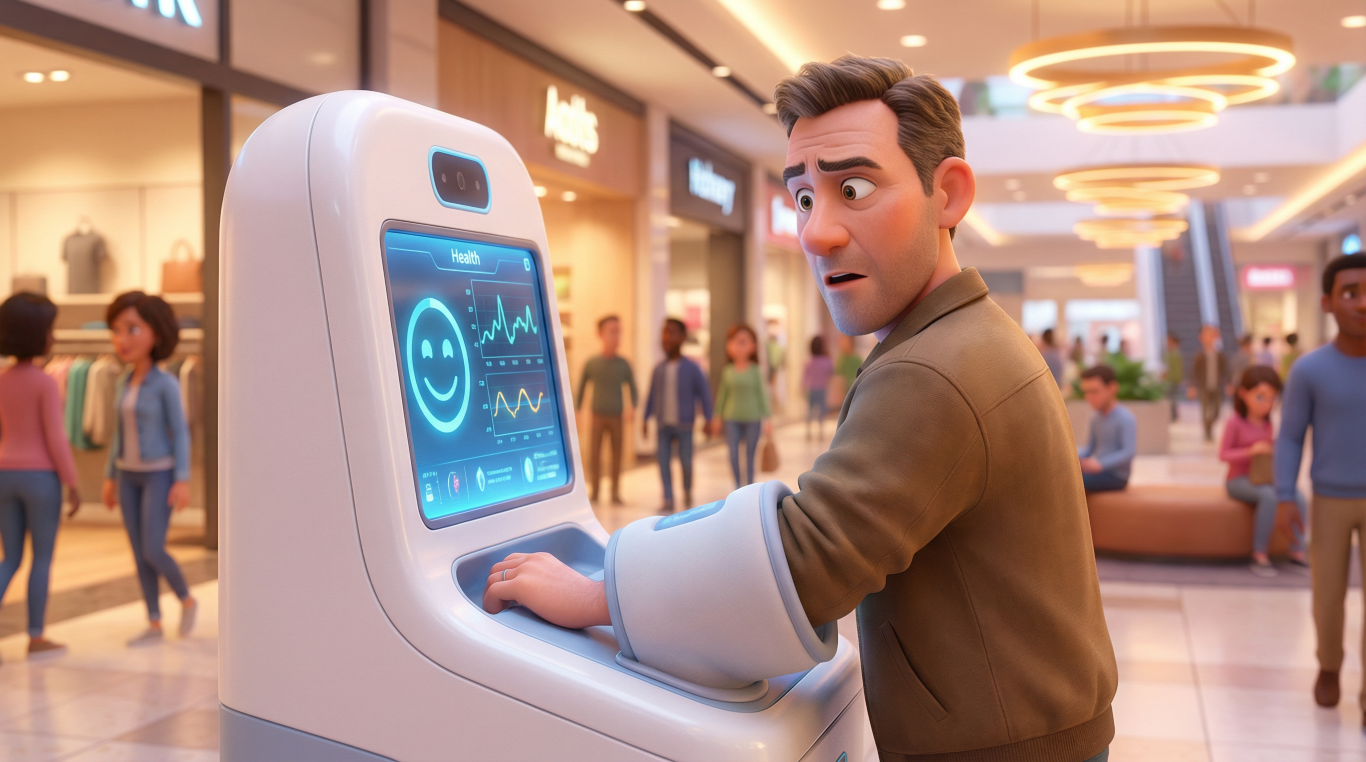
The first time I saw an AI health kiosk, I thought it was one of those fancy coffee machines that’s somehow ended up in the wrong building. You know the type, all sleek and touchscreen-y, looking far too modern for its own good. Turns out, I was spectacularly wrong. These machines are quietly revolutionising how we think about healthcare access, and I reckon it’s about time we had a proper chat about them.
Why AI Health Kiosks Matter (And Yes, They Really Do)
Here’s the thing about healthcare that drives me absolutely spare: it’s brilliant when you can get it, but getting to it? That’s another story entirely. You need an appointment three weeks from Tuesday. You sit in a waiting room that smells faintly of antiseptic and old magazines. You take time off work. You travel. You wait some more. And sometimes, you just need someone to check your blood pressure or renew a prescription.
AI health kiosks are stepping in to solve this particular headache. Think of them as the halfway house between doing nothing about that nagging health concern and booking a full appointment with your GP. They’re popping up in shopping centres, pharmacies, workplaces, and community centres, offering basic health checks without the three-week wait or the guilt of taking up your doctor’s valuable time for something relatively straightforward.
The importance here isn’t just about convenience, though that’s lovely. It’s about access. It’s about catching problems early. It’s about people who might not bother with a full doctor’s appointment actually checking their health regularly. And in a world where our NHS is stretched thinner than my patience in a queue, that matters enormously.
What These Clever Boxes Actually Do (And What They Don’t)
Let me paint you a picture of what medical kiosks are genuinely useful for. They excel at the routine stuff, the measurements and checks that don’t require a medical degree to interpret, at least not initially. We’re talking blood pressure monitoring, temperature checks, weight and BMI calculations, heart rate monitoring, and basic symptom assessment. Some of the fancier telehealth kiosks can even do vision and hearing tests, check your oxygen levels, and measure your blood glucose.
What they can do brilliantly is collect data, spot patterns, and flag when something looks dodgy enough that you should probably see an actual human doctor. They’re like having a really attentive health-conscious friend who remembers every single health metric you’ve ever had and notices when things change.
Now, what they’re NOT used for is equally important, and this is where people sometimes get their knickers in a twist. These kiosks aren’t replacing your doctor. They can’t diagnose complex conditions. They won’t perform surgery (obviously, I hope that’s obvious). They can’t provide the nuanced understanding that comes from years of medical training and experience. They won’t pick up on the subtle cues that an experienced GP might notice when you say you’re “fine” but clearly aren’t.
They’re not for emergencies. If you’re having chest pains or struggling to breathe, you don’t pop to the kiosk at Tesco, you call 999. They’re screening tools, monitoring devices, and access points to further care, not replacements for comprehensive medical attention.
The Road We Travelled to Get Here
Before AI health kiosks became a thing, we had what I’d call the “suffer in silence or see the doctor” approach to healthcare. There wasn’t much middle ground. You either ignored that persistent cough or you booked an appointment. Some forward-thinking pharmacies had basic blood pressure monitors you could use yourself, the kind where you’d sit there hoping you were doing it right whilst other shoppers queued behind you.
We had workplace health screenings, but those were often annual affairs, elaborate productions involving actual nurses visiting companies. Community health programmes existed, but they required staffing, scheduling, and significant resources.
The evolution towards today’s AI health kiosks happened in stages, and it’s rather fascinating when you look at it properly.
From Humble Beginnings to Today’s Smart Machines
The earliest versions, appearing around the early 2010s, were essentially automated measurement stations. Think of them as slightly clever weighing scales with delusions of grandeur. They could take your blood pressure, measure your weight, and maybe calculate your BMI. You’d get a printed receipt with numbers on it, and off you’d go, none the wiser about what those numbers actually meant unless you were already medically savvy.
The benefit over the previous system? Well, they were there. Available. No appointment needed. You could check your blood pressure whilst doing your weekly shop, which was genuinely novel.
The second generation, rolling out around the mid-2010s, got smarter. These telehealth kiosks started incorporating basic artificial intelligence to interpret the data they collected. Instead of just giving you numbers, they’d tell you whether those numbers were concerning. They added more sensors, more tests. Some included video conferencing capabilities, so you could actually speak to a healthcare professional remotely if needed. The screens got bigger, the interfaces got friendlier, and crucially, they started connecting to electronic health records.
This was a massive leap forward because now your kiosk reading could actually inform your ongoing healthcare. Your doctor could see that you’d been monitoring your blood pressure at the supermarket kiosk and it had been creeping up. That’s useful information.
The current generation, what we’re seeing now in the late 2010s and into the 2020s, is where things get properly interesting. Modern AI health kiosks use sophisticated machine learning algorithms. They don’t just measure and report, they analyse patterns over time. They can compare your results against vast databases of health information. They ask intelligent questions based on your symptoms, following decision trees that mimic how a doctor might narrow down what’s wrong with you.
They’ve got better sensors, more accurate readings, and interfaces designed by people who understand that not everyone is a technology whiz. Some can perform ECGs, detailed vision tests, and even basic cognitive assessments. The really advanced ones can connect you to a doctor via high-quality video link right there and then, turning the kiosk into a private consultation room.
The benefit over earlier versions? It’s the difference between a thermometer and a doctor’s assessment. These machines don’t just collect data, they help you understand it and guide you towards appropriate action.
How These Technological Marvels Actually Work
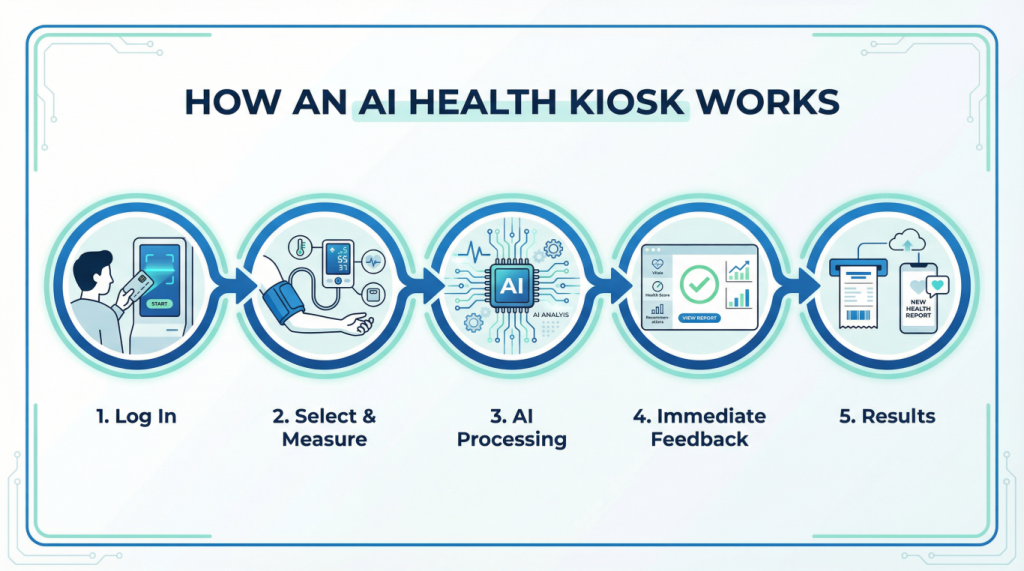
Right, let’s walk through what actually happens when you use one of these medical kiosks, because it’s less intimidating than you might think.
First, you approach the kiosk, which typically looks like a large tablet or computer screen, sometimes housed in a private booth. You’ll start by identifying yourself, either by entering some basic information or, if you’ve used it before, by scanning a card or entering a code. This isn’t Big Brother watching you, it’s so the system can track your health metrics over time and spot trends.
Next, the screen guides you through what you want to do. It’s usually quite straightforward, rather like using a cash machine but with more questions about whether you’ve been coughing lately. You might select “check blood pressure” or “assess symptoms” or whatever’s brought you there.
Then comes the measurement phase. For blood pressure, you’ll put your arm in a cuff, just like at the doctor’s. The machine does its thing, squeezing and measuring. For other tests, you might stand on a scale, look into a viewer for vision tests, or place your finger on a sensor for oxygen levels. The sensors feed data into the system in real-time.
Here’s where the AI bit kicks in. The system takes your measurements and runs them through its algorithms. It’s comparing your numbers against medical guidelines, against your previous readings if you’ve used the kiosk before, and against patterns it’s learned from thousands of other users. It’s asking itself: is this normal? Is this concerning? Has this changed significantly?
Based on that analysis, you get feedback. This might be a simple “your blood pressure is within normal range, well done you” message. Or it might be “your blood pressure is elevated, you should speak to your GP.” The better systems explain why they’re making these recommendations, which I appreciate because I’m not keen on being told what to do without explanation.
If you’ve been answering questions about symptoms, the AI uses something called a symptom checker algorithm. You tell it you’ve got a headache, it asks about other symptoms, duration, severity, and so on. Based on your answers, it suggests possible causes and whether you need to see a doctor urgently, soon, or whether it’s likely something you can manage at home.
Some kiosks then offer to connect you with a healthcare professional via video call. If you choose this, you’re essentially having a telehealth appointment right there in the booth, with the added benefit that the healthcare professional can see all the measurements the kiosk just took.
Finally, you get a summary, usually printed or sent to your email or phone. This includes your measurements, the system’s assessment, and recommendations for next steps. If the kiosk is connected to your health records (with your permission), this information can be shared with your regular doctor.
The whole process typically takes between five and fifteen minutes, depending on what you’re doing. No appointment needed, no waiting room, no taking time off work.
What’s Coming Down the Pipeline
The future of AI health kiosks looks rather exciting, if I’m honest, though I’m trying not to get carried away with sci-fi fantasies.
We’re likely to see these kiosks becoming far more sophisticated in their diagnostic capabilities. Imagine kiosks that can perform basic blood tests with a tiny finger prick, analysing results immediately using lab-on-a-chip technology. This isn’t fantasy, it’s already in development.
Integration with wearable technology is another frontier. Your smartwatch has been tracking your heart rate, sleep patterns, and activity levels for months. Future kiosks could pull that data in, giving healthcare providers a much richer picture of your overall health. It’s like the difference between a snapshot and a full photo album.
We’ll probably see better AI, which sounds obvious, but I mean AI that can have more natural conversations, understand context better, and make more nuanced assessments. The technology is moving towards systems that can pick up on things like your tone of voice or facial expressions during a video consultation, adding another layer of assessment.
Personalisation is the big one. Future systems will know your health history, your risk factors, your family history, and tailor their questions and recommendations specifically to you. Rather than generic advice, you’ll get guidance that accounts for your specific situation.
I also expect we’ll see these kiosks in more locations. Not just pharmacies and shopping centres, but workplaces, schools, care homes, and remote communities where access to healthcare is genuinely difficult. Mobile kiosks that can be deployed to areas of need. The potential for improving healthcare access is substantial.
The Serious Bit: Security and Why You Should Care
Now, I need to put on my serious hat for a moment, because whilst AI health kiosks are brilliant, they’re also collecting some of your most personal information. Your health data is sensitive, valuable, and frankly, something criminals would love to get their hands on.
Think about what these kiosks know about you. Your weight, blood pressure, medical symptoms, possibly your NHS number or other identifying information, your contact details. If this data isn’t properly protected, it could be accessed by unauthorised people, stolen, or misused.
The vulnerabilities are real. Like any connected device, these kiosks can be hacked if they’re not properly secured. If the software isn’t regularly updated, security holes can be exploited. If the data transmission between the kiosk and healthcare providers isn’t encrypted, it could be intercepted. If the company running the kiosks doesn’t have robust data protection policies, your information could be sold or leaked.
There’s also the physical security aspect. These kiosks are often in public spaces. Can someone watch over your shoulder as you enter personal information? Can they access data left on the screen by the previous user? These aren’t theoretical concerns, they’re practical issues that need addressing.
Here’s what you should look for and insist upon. First, the kiosk should clearly display information about who operates it and how your data will be used. If this information isn’t readily available, that’s a red flag. Second, check that the kiosk operator complies with UK data protection laws (GDPR and all that). Reputable operators will be transparent about this.
When using a kiosk, be aware of your surroundings. Don’t enter sensitive information if someone’s looking over your shoulder. Make sure you properly log out or end your session. Don’t leave printed results lying around.
Ask questions. If a kiosk is installed at your workplace or local pharmacy, ask who has access to the data, how it’s stored, how long it’s kept, and whether it’s shared with third parties. You have every right to know this.
Be cautious about kiosks that ask for more information than seems necessary. If you’re just checking your blood pressure, why would it need your full medical history? Legitimate systems will only ask for what’s needed for the specific service you’re using.
The technology providers and healthcare organisations deploying these kiosks have a responsibility to prioritise security, but you also need to be an informed user. It’s your health data, and you should be protective of it.
Wrapping This All Up
So here we are, at the end of our journey through the world of AI health kiosks. I started by thinking they were fancy coffee machines, and I’ve ended up genuinely impressed by what they offer and thoughtfully concerned about their challenges.
These telehealth kiosks represent something important: a shift towards more accessible, more regular, more preventative healthcare. They’re not perfect, and they’re certainly not replacements for proper medical care, but they’re filling a gap that desperately needed filling. They’re making it easier for people to monitor their health, catch problems early, and access basic healthcare services without the barriers that often prevent people from seeking help.
The technology has come remarkably far in a relatively short time, from simple measurement stations to sophisticated AI-powered health assessment tools. The future looks even more promising, with better integration, more capabilities, and wider deployment on the horizon.
But, and this is important, we need to approach them with our eyes open. The security and privacy concerns are real and significant. As these systems become more prevalent and more capable, the importance of robust data protection only increases.
My advice? Use them. They’re a valuable tool in managing your health. But use them wisely. Understand their limitations. Protect your privacy. Ask questions. And remember that whilst an AI health kiosk can tell you a lot about your health, it can’t replace the expertise, experience, and human touch of a good doctor.
The future of healthcare is likely to be a blend of human expertise and technological assistance, and medical kiosks are an important part of that future. They’re not the whole answer, but they’re definitely part of it. And honestly, that’s rather exciting.
Now, if you’ll excuse me, I’m off to find one of these kiosks and check my blood pressure. All this writing about health technology has made me rather curious about my own numbers.
Walter
Leave a Reply