
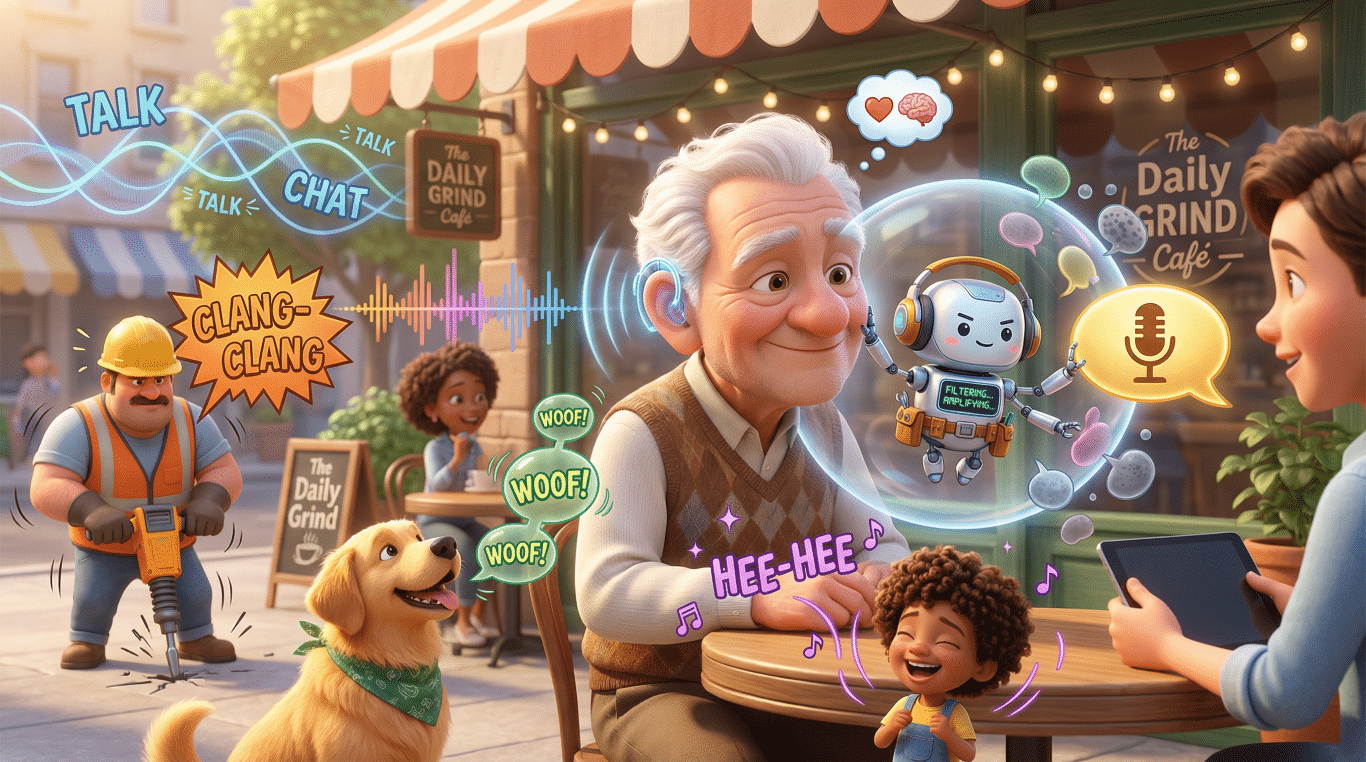
I never thought I’d get excited about something that fits in your ear. But here we are, living in 2026, and I’m genuinely gobsmacked by what’s happening with hearing aids. We’re talking about devices smaller than a coffee bean that can do things my laptop struggled with five years ago. It’s bonkers, really.
Why This Technology Matters More Than You Think
Let me paint you a picture. Remember when your Granddad got their first hearing aid and they looked like they were wearing a beige banana behind their ear? And remember how they’d fiddle with it constantly, trying to hear you but ending up with that awful whistling sound instead? Those days are disappearing faster than common sense on social media.
Here’s the thing about hearing loss that nobody really talks about. It’s not just about missing words or asking people to repeat themselves. It’s about isolation. It’s about feeling disconnected from the world around you. Studies show that untreated hearing loss is linked to depression, cognitive decline, and even dementia. When you can’t hear properly, you stop going out. You stop engaging. You become a smaller version of yourself, and that’s heart breaking.
That’s why smart hearing aids in 2026 aren’t just gadgets. They’re lifelines. They’re the difference between sitting quietly in the corner at your grandchild’s birthday party and actually joining in the chaos. They’re the technology that lets you stay you.
What AI Hearing Aids Actually Do (And What They Don’t)
Right, let’s get practical. Modern AI hearing aids are essentially tiny computers that sit in your ear and make sense of the sound chaos around you. They’re brilliant at several things.
First, they separate speech from background noise. Imagine you’re at a restaurant, the kind with terrible acoustics where everyone’s shouting over everyone else. Your AI hearing aids can identify your dinner companion’s voice and amplify it while reducing the clatter of plates and the couple arguing three tables over. It’s like having a sound engineer in your ear canal.
Second, they adapt to your environment automatically. Walking from a quiet library into a busy street? The hearing aids adjust in real time. No fiddling, no buttons, no looking like you’re trying to tune in a radio station from 1975.
Third, they learn your preferences. If you consistently turn up the volume when your grandson calls, the hearing aids remember that. They’re personalizing your hearing experience based on your actual life, not some generic setting.
But let’s be clear about what they’re not. They’re not miracle workers. If you have profound hearing loss, you still need proper medical intervention. They’re not replacements for treating underlying health conditions. And they’re definitely not fashion accessories, though I’ll admit they’re getting rather sleek.
They also won’t make you hear things that aren’t there or give you superhuman hearing. You’re not suddenly going to eavesdrop on conversations across the room like some spy film character. They’re restoration devices, not enhancement devices.
The Journey From Ear Trumpets to Artificial Intelligence
The history of hearing aids is actually fascinating, and I promise I’m not being sarcastic. Bear with me.
The Acoustic Era (Pre-1900s)
Before electricity, we had ear trumpets. Literally trumpets you stuck in your ear. They were about as subtle as a brass band in a library. They worked on pure physics, funnelling sound waves into your ear canal. Better than nothing, but you looked like you were permanently ready to receive a royal proclamation.
The Carbon Era (1900s-1940s)
Then came carbon hearing aids, which used the same technology as early telephones. They were bulky things with battery packs you wore on your body. Imagine carrying a brick in your pocket just to hear your spouse nag you about the gardening. Progress, but not exactly convenient.
The Vacuum Tube Era (1920s-1950s)
Vacuum tubes made things slightly better. The sound quality improved, but the devices were still massive. You needed a separate battery pack, and the whole setup weighed enough to give you a backache. My uncle had one in the 1950s, and he said it was like carrying around a car battery just to hear the cricket scores.
The Transistor Revolution (1950s-1990s)
Now we’re getting somewhere. Transistors changed everything. Suddenly, hearing aids could fit behind your ear. They were still visible, still required regular battery changes, and the sound quality was tinny at best. But you could wear them without looking like you were auditioning for a science fiction film. This was the era most people over 50 remember, those beige devices that whistled whenever you got near a telephone.
The Digital Age (1990s-2010s)
Digital hearing aids were the game-changer. Instead of just amplifying everything (including the stuff you didn’t want to hear), they could process sound. They had multiple channels, directional microphones, and feedback cancellation. No more whistling. Well, less whistling anyway.
The benefit was enormous. You could actually have a conversation in a noisy environment without feeling like you were underwater. The devices got smaller too, with some fitting entirely in the ear canal.
The Smart Era (2010s-2020)
Then hearing aids got smart. They connected to your smartphone via Bluetooth. You could stream phone calls, music, and podcasts directly into your ears. You could adjust settings through an app. They had rechargeable batteries, so you weren’t constantly buying those expensive little button cells.
This was when hearing aids stopped being just medical devices and started becoming lifestyle devices. The stigma began to fade because, frankly, everyone was walking around with things in their ears anyway.
The AI Revolution (2020-Present)
And now we arrive at hearing aids 2026. This is where things get properly exciting. AI hearing aids don’t just process sound, they understand it. They use machine learning algorithms (fancy term for computers that learn from experience) to distinguish between different types of sounds and make intelligent decisions about what you need to hear.
The miniaturization is staggering. We’re talking about devices that are genuinely smaller than a coffee bean, yet they contain more computing power than the computers that sent astronauts to the moon. They have multiple microphones, wireless connectivity, AI processors, and batteries that last all day, all in a package you can barely see.
How These Tiny Marvels Actually Work
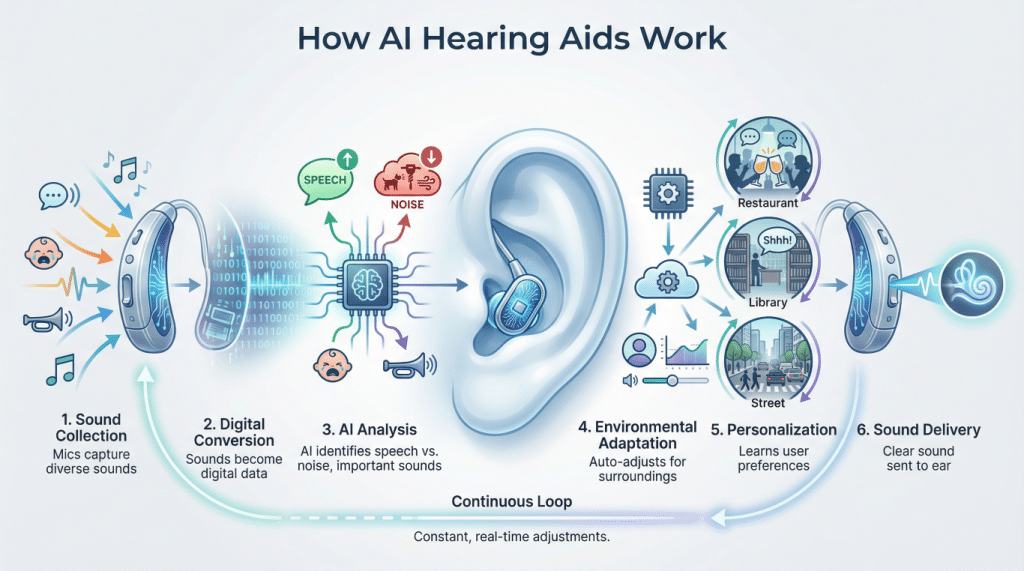
Let me walk you through what happens when you’re wearing AI hearing aids. It’s rather clever, actually.
Step One: Sound Collection
Multiple tiny microphones (we’re talking three or four in some models) capture sound from different directions. Think of them as having several ears instead of two. This gives the device a three-dimensional understanding of where sounds are coming from.
Step Two: Digital Conversion
The sound waves get converted into digital signals. This is the same process that happens when you record your voice on your phone. The analogue sound becomes a series of numbers that computers can manipulate.
Step Three: AI Analysis
Here’s where the magic happens. The AI processor analyzes these digital signals in real time. It’s asking questions like: Is this speech or noise? Is this the voice of someone directly in front of the wearer? Is this a sound that matters or background rubbish?
The AI has been trained on millions of sound samples. It knows what a crying baby sounds like versus a car horn versus your partner’s voice. It makes decisions in milliseconds about what to amplify and what to reduce.
Step Four: Environmental Adaptation
The AI identifies the environment. Restaurant? Quiet room? Busy street? Windy outdoors? Each environment needs different processing. The algorithms adjust compression, gain, and directionality based on the situation.
Step Five: Personalization
Remember when I mentioned these devices learn? They’re constantly collecting data about your preferences. Not in a creepy way, but in a helpful way. If you manually adjust the volume in certain situations, the AI remembers. Over time, it anticipates your needs.
Step Six: Sound Delivery
Finally, the processed sound gets converted back to sound waves and delivered to your ear through a tiny speaker. The whole process, from sound entering the microphone to reaching your eardrum, happens in less time than it takes to blink.
The Continuous Loop
This isn’t a one-time process. It’s happening constantly, adjusting hundreds of times per second as your environment changes. You walk from indoors to outdoors? The hearing aids are already adjusting before you notice the change.
The Future Is Smaller, Smarter, and Slightly Scary
So where are we heading? Buckle up, because the future of smart hearing aids is both exciting and a bit unsettling.
Even More Miniaturization
We’re approaching the limits of how small we can make these devices, but manufacturers aren’t done yet. The goal is completely invisible hearing aids that sit entirely in the ear canal. Some companies are experimenting with devices that sit on the eardrum itself).
Health Monitoring
Future AI hearing aids will do more than help you hear. They’re perfectly positioned to monitor your health. Your ear canal is surprisingly useful for tracking heart rate, body temperature, and even blood oxygen levels. Some devices are already testing fall detection, which could automatically alert emergency services if you take a tumble.
Real-Time Translation
Imagine having a conversation with someone who speaks a different language, and your hearing aids translate in real time. This technology exists now in early forms, but it’s getting better rapidly. In five years, language barriers might become significantly less challenging.
Brain-Computer Interfaces
This is where things get properly science fiction. Researchers are exploring hearing aids that can read your brain signals to understand what you want to hear. In a noisy room with multiple conversations, the device would amplify the one you’re focusing on based on your neural activity. It sounds mad, but the early research is promising.
Integration With Everything
Your hearing aids will talk to your home. They’ll know when you’re watching television and optimize for that. They’ll connect to your car and enhance important sounds while driving. They’ll integrate with your smart home to alert you to doorbells, smoke alarms, and your phone ringing.
Wrapping This All Up
So here we are. Smart hearing aids in 2026 are genuinely remarkable pieces of technology. They’re smaller than a coffee bean, more powerful than computers that once filled entire rooms, and they’re using artificial intelligence to restore one of our most precious senses.
The journey from ear trumpets to AI hearing aids has been long, but the pace of innovation is accelerating. What seemed impossible a decade ago is now sitting in millions of ears around the world, quietly (or not so quietly) improving lives.
These devices aren’t perfect. They have security concerns, they’re expensive, and they can’t fix every type of hearing loss. But they’re transforming what it means to have hearing difficulties. They’re removing stigma, improving quality of life, and keeping people connected to the world around them.
The future looks even more promising. Smaller devices, better AI, health monitoring, real-time translation, these aren’t science fiction anymore. They’re coming, and they’re coming soon.
If you’re struggling with your hearing, or you know someone who is, this is genuinely the best time in human history to address it. The technology has finally caught up with the need. AI hearing aids aren’t just medical devices anymore, they’re sophisticated computers that happen to help you hear.
And yes, they really are smaller than a coffee bean. I measured. It’s absolutely bonkers, and I love it.
The world is getting louder and more chaotic, but at least now we have the technology to help everyone stay part of the conversation. That’s worth celebrating, even if we have to shout a bit to be heard over the noise.
Walter
Leave a Reply